
Most gutter problems start small. A corner drips during rain, one stretch hangs a little lower than the rest, or a downspout elbow comes loose and spills water right next to the house. None of it looks urgent on a dry day. Then a storm comes through and that one drip is running down the siding for six hours straight. Near the water in Tiburon and Sausalito, salty air and bay wind add their own wear, working on fasteners and loosening hangers faster than on inland houses. The good news is that a sound gutter system with one or two problems can usually be fixed in a single visit, without replacing anything that still works.
On this page we cover the problems that are worth repairing, the parts of a gutter system and how each one fails, what a repair visit looks like, and how to tell when patching has stopped making sense. If your gutters are mostly fine but keep filling with leaves between cleanings, take a look at gutter guards as well, since a clean gutter puts far less strain on its hangers and seams.
Signs Your Gutters Need Repair
Watch your gutters during a real rain, not a drizzle. Water dripping from a seam or a corner, instead of flowing out the downspout, means a joint has opened. Water sheeting over the lip in one spot often means that section has lost its pitch and is holding water. A gutter that's pulled away from the fascia, even half an inch, means hangers have loosened or the screws have stripped. Downspouts that rattle, lean or have a gap at an elbow need reattaching. After the storm, look for stains or moss on the siding under the gutter line, and for small trenches in the soil where water has been landing. Each of those marks a spot that's ready for repair.
Hangers, Seams, End Caps and Outlets: Where Gutters Fail
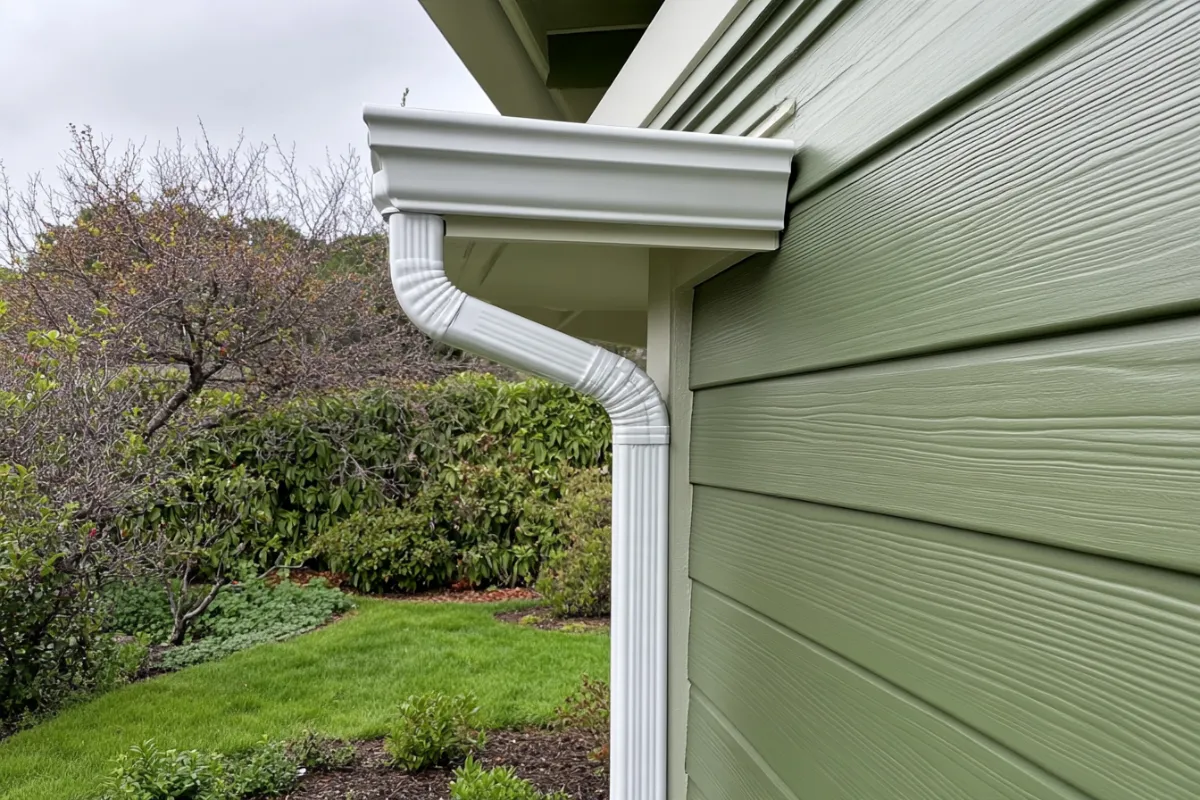
A gutter system is a handful of simple parts, and each fails in its own way. Hangers hold the gutter to the fascia. Older spike-and-ferrule mounts work loose over time, and the gutter starts to sag between them. Seams and corners on sectional gutters are sealed with caulk or sealant that dries out and cracks after years of sun and rain. End caps close off each run and can leak at the edges for the same reason. Outlets are the holes where water drops into the downspout, and they clog or separate from the gutter. Downspout elbows and straps loosen, especially where they get bumped by ladders or trash cans. Knowing which part failed tells us whether it's a 20-minute fix or a sign of something bigger.
Free estimate, no obligation.
Call (415) 891-0258What a Repair Visit Looks Like
We start with the spot you called about, then walk the rest of the system, since gutters that leak in one place often have a second problem nearby. Loose sections get rehung, usually with hidden hangers screwed into solid wood, which hold much better than the old spikes. Leaking seams and corners get cleaned down to bare metal and resealed with gutter sealant made for the job. Sagging runs get re-pitched so water moves toward the downspout again. Separated outlets and downspouts get refastened. If we find soft fascia behind a loose hanger, we show you before doing anything else. Then we put a hose on the repaired sections to make sure the fix holds.
When Repair Stops Making Sense
Repair is the right call when the problem is in one or two places and the rest of the gutter is solid. It stops making sense when you're fixing something new every season, when leaks show up at most of the joints, or when the gutter is rusted through, bent out of shape or too small for the roof above it. At that point, each repair buys a few months while the fascia keeps taking water. We'll tell you plainly which side of that line your gutters are on. Plenty of calls end with a straightforward repair and a recommendation to come back in a few years. Some end with us pointing out that the money is better spent on a new system.
If that's where your gutters are, our gutter replacement page explains what a full swap involves.
Common Questions
A leaking seam can almost always be fixed. We scrape out the old sealant, clean the metal and reseal the joint from the inside with a sealant made for gutters. On a sound gutter, that repair can hold for years. Replacement only makes sense when many seams are leaking at once or the metal itself is rusted or damaged. If that's the case, we'll show you what we see rather than just telling you.
Sagging usually means the hangers have pulled loose, the screws have stripped out of the wood, or the gutter has been carrying weight from wet leaves or standing water. Most of the time we can rehang the section with new hidden hangers driven into solid wood and reset the pitch so it drains. If the fascia board behind it is soft, the board needs fixing first, or new hangers won't hold.
Small repairs like resealing a corner, reattaching a downspout or rehanging a short section are usually modest jobs, often finished in an hour or two. The price goes up with the number of problem spots, a second story, or fascia that needs replacing behind the gutter. We look at the whole system first and give you a written price before doing any work, so there are no surprises when we're done.